The Economist wrote a very comprehensive article on energy and environmental politics in Norway. Though they pretty much got all the major points right, I disagree with both their conclusions and Norwegian politics on these topics. What do you know! :-)
How Norwegians choose to use our energy is hardly relevant compared to the global energy consume. We are after all only 5 million people up here. So it is a bit like the mouse peeing in the ocean.
Do anybody care if a small country like Norway act like a good example? I seriously doubt it. We might like to think we do, but based on my international experience it doesn't account for much in big politics. It's not like we are even invited by the G8 (fill in number, it used to be 7) countries to discuss the matters. Not for real.
What Norway could do with all our money is to develop alternative energy technology. I have no idea who came up with this buying CO2 quotas. It is plain stupid and does not reduce the global production of gases. I can't get how the rest of the world don't get this. They are fooling themselves to think this is green politics. It is nothing but helping poorer countries reach the same level of pollution as the rich world, ideally, as opposed to the alternative that they will produce even more than we are at this point of time. Need I remind y'all that India and China alone are populated by 2.4 billion people? We can't quota buy us out of that energy problem. Why should we ask them to live without the energy we have? We can't and they shouldn't and will not accept that. That is all.
We will be out of oil one day. By then we might have drowned in CO2 or whatever - and we have no alternatives. Not for cars at least. Non-mobile equipment will be fuel by coal or nukes, but the cars will at best start to roll real slow compared to today. And that we can't have. :-)
The solution is using technology to reduce the emissions today and invent alternatives for the future.
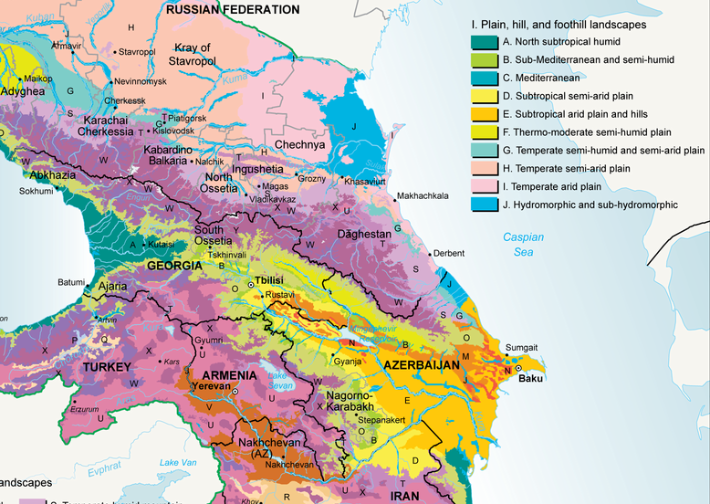
Climate zones of the Caucasus ecoregion. The Caucasus ecoregion covers an area of 580,000 km2, and includes six countries. The Greater Caucasus Mountain Range with its lofty peaks forms a formidable barrier between the northern and southern parts of the ecoregion. The Lesser Caucasus mountain chain extends across Georgia, Turkey, Armenia, Azerbaijan and into Iran. The climates in the regions mountaineous and temperature.
Close up of conflict area
I am a fan of background information related to world events. Geographical information is of great importance to those who have to deal with the conflict in Georgia/Ossetia these days. The various types of climate need to be taken into account on all levels - from the inside and outside. Check out Foreingergrl's pages for more intel on this hot spot on our planet.
Norway, a country with merely 5 million inhabitants, is the third largest oil producing country in the world.
New York Time express critical views on Norway's pledge of becoming carbon neutral by 2030.
In my opinion, this article reflects a defensive attitude from the US, being one of the countries not willing to commit itself to a common global effort to reduce emissions.
Norway being so lucky in the natural resources lottery, has a responsibility also outside its boarders. It is a matter of fact that most people do not live in Norway. We are all concerned about what will happen with the large developing countries like China and India. It is whether we like it or not how this region handles the energy challenge that will determine the environmental destiny for all of us. What countries like Norway can do is to set the stage by being a good example, support environmental friendly development, improve clean energy production and finally invest in new energy technology development.
Norway may or may not be successful in implementing its policies. It should be no excuse for each and every country to do the same as Norway - TRY!
PlanetBye is a blog run by Bente Lilja Bye aka Stellare. PlanetBye covers mainly scientific topics but also completely random topics like art, social media, personal ramblings etc. The posts on this blog are generally short with links to further reading and sources of information. Clicking on images is encouraged.





 Posts
Posts


