skip to main |
skip to sidebar
Sunquakes

Credit: SOHOSolar flares are large explosions on the Sun's surface caused by a sudden release of magnetic energy. They are known to cause local short-lived oscillations traveling away from the explosion like water rings. It turns out that the energy in the solar acoustic spectrum is correlated with flares. This means that the flares drive global oscillations in the Sun in the same way that the entire Earth is set ringing for several weeks after a major earthquake such as the 2004 December Sumatra-Andaman one.
Solar flares are the ones feeding the solar wind that hits the Earth.
You must watch this awesome video of a sun very much alive! You simply must!
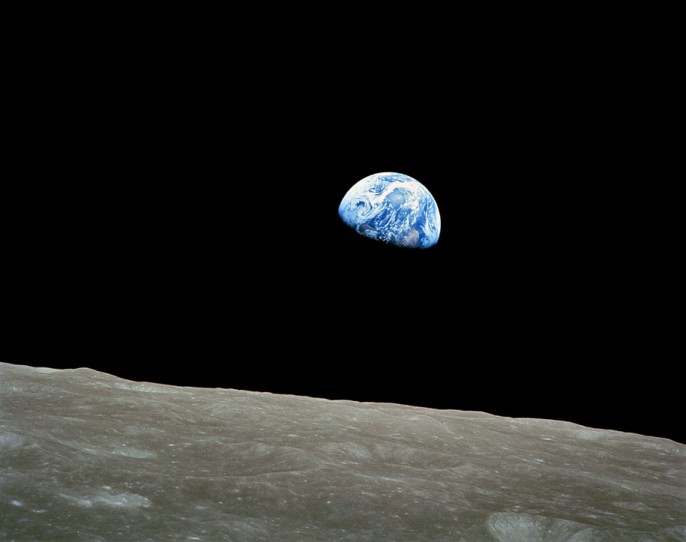
Earth Day April 22

Credit: Apollo 8, NASA (1968)
Each year Earth Day marks the anniversary of the birth of the modern environmental movement in 1970.
The first Earth Day led to the creation of the United States Environmental Protection Agency and the passage of the Clean Air, Clean Water, and Endangered Species acts.
In 1990 the Earth Day became a global event and gave a huge boost to recycling efforts worldwide and also helped pave the way for the 1992 United Nations Earth Summit in Rio de Janeiro.
Earth Day - Understanding and Protecting Our Environment The better we know our planet the better we can take care of it. Scientists around the world restlessly work on improving our understanding of our home planet and here on Stellare that will be the perspective on Earth Day.
Earthquakes are one of the more dramatic behaviors of the Earth. Understanding and predicting earthquakes will save lives and have economic impacts. Earthquakes can be devastating for the environment such as fires, contamination of fresh water sources etc. Earth Day here on Stellare will cover earthquakes and other quakes...
There are however many aspects of understanding and protecting our planet. A group of SU members will demonstrate various angles of looking at what and how to protect and understand planet Earth. (That includes more earthquakes, hurricanes, cultural heritage and more)
BumApples
Comely1
Frannyy
Geojim56
IntrepidDreamer
MBMC
ShirlT
TapWaterJ
XineAnn
Yopp
will all celebrate Earth Day.Stay Tuned!
Frightful Flare From Black Hole

Credits: NASA/CXC/MIT/Frederick K. Baganoff et al.Sagittarius A-star (A*), is a certified monster, containing about 4 million times the mass of our Sun. It is our galaxy's central monster black hole and as it turns out, it let loose a powerful flare three centuries ago. We know this because of Newton; not Isac Newton, but the space telescope XMM-Newton from ESA and a couple of X-ray instruments from NASA (US) and JAXA (Japan).




 Posts
Posts


